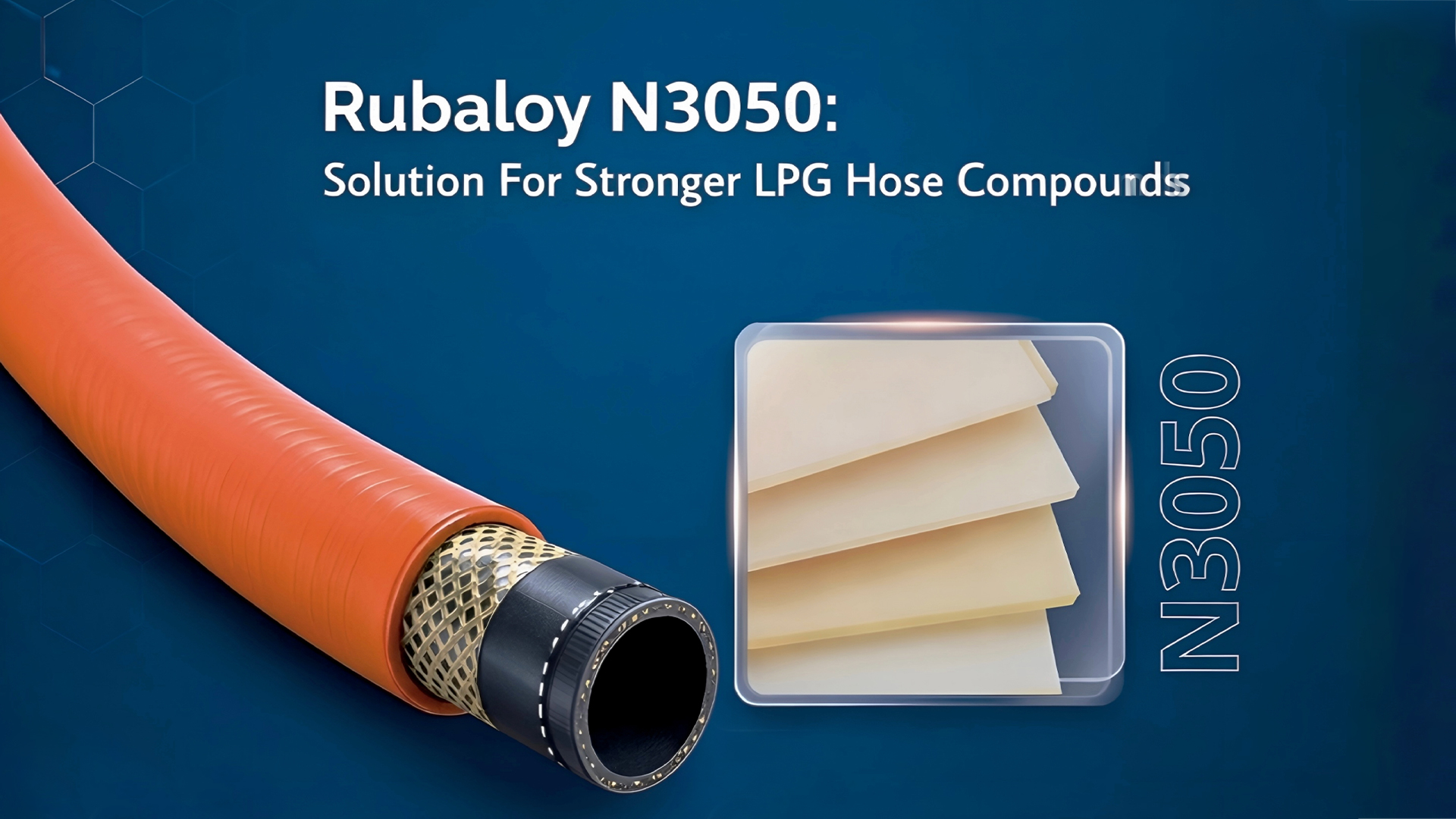
Rubaloy N3050: Engineered for Key LPG Hose Performance
Around 60–70% of LPG hoses used in industrial and domestic applications are manufactured using NBR or NBR/PVC-based elastomer compounds, due to their superior resistance to hydrocarbons and gas permeation
Choosing the right materials for LPG hose manufacturing poses a critical safety challenge. LPG is a highly flammable and pressurized hydrocarbon gas. Therefore, the materials used to make the hose must be able to withstand extended periods of exposure to fuel, pressure, and the elements. The material compound used to manufacture hoses directly determines their flexibility and long-term performance.
Using low-grade compounds during hose production can lead to swelling, cracking, gas permeability, and premature failure. Each of these issues reduces the hose's service life and increases the risk of leakage and safety hazards. For this reason, material integrity should never be compromised in any application involving the transport of flammable gas.
In contrast to water or air hoses, LPG hoses must be constructed from specifically formulated elastomeric compounds that are resistant to hydrocarbons, have low gas permeability, provide good mechanical strength and flexibility, are flame-retardant, and are not adversely affected by aging. This type of balance can only be achieved with a developed polymer system, rather than general-purpose materials.
This is why NBR/PVC blends are the right choice for LPG applications. By combining NBR’s fuel resistance and PVC’s flame resistance and structural stability, the resulting blend produces a reliable, high-quality, dependable product.
The N3050 formulation enhances flexibility compared to standard NBR/PVC compounds while reducing die swell during extrusion. It also maintains higher tensile strength and modulus than conventional NBR materials, offers a lower compression set, and delivers superior ozone resistance and surface finish. These combined properties make N3050 highly suitable for long-term LPG hose performance.
Fuel & Oil Resistance
The chemical nature of LPG (liquefied petroleum gas) is made up of aggressive hydrocarbons. If the base material that the hose is manufactured from is not accurately specified to handle this gas, there can be an adverse reaction with the rubber itself. An example of this is inferior elastomers.
When inferior elastomers are used by LPG hose manufacturers, they will absorb these aggressive hydrocarbons from the LPG gas, which will lead to swelling. Hose swelling will ultimately lead to dimensional instability, reduced tensile strength, and reduced mechanical performance over time.
The risk of rubber hose leakage increases with age, which can lead to safety issues, operational downtime, and premature hose failure. In LPG applications, there is no room for compromise on safety; therefore, the use of fuel-resistant materials in hoses is essential to ensure reliable hose operation throughout the LPG service life.
How N3050 Delivers
N3050 is specially formulated to improve hose performance in LPG applications. N3050 has an optimized level of acrylonitrile within the NBR phase, which enhances the resistance to hydrocarbon absorption of NBR rubber and thereby minimizes any potential swelling of the elastomer.
The polymers in the N3050 formulation are compatibilized to yield a uniform polymer dispersion, reducing fuel uptake and maintaining the hose's dimensional stability under long-term LPG exposure. As a result, hoses produced from N3050 retain their initial mechanical strength, flexibility, and sealing integrity for long-term, safe service in extreme LPG conditions.
Gas Loss Prevention (Low Permeation Rates)
To ensure safe LPG use, the hose must prevent gas from leaking through the inner tube, preventing unsafe operating conditions. Due to the size of LPG molecules, it is very easy for them to migrate through poorly designed, untested materials.
With gradual gas leakage over time due to permeation under ambient or extreme conditions, this can lead to pressure loss, reduced operational efficiency, and additional hazards. Even small amounts of gas leaking into an enclosed area could create a very dangerous situation. Additionally, excessive gas permeation rates will shorten the service life of hose products made from compounds with poor barrier properties during warehousing and transportation.
How N3050 Delivers
N3050 has been formulated to exhibit superior resistance to gas permeation due to a highly compact, strong, and consistent polymer structure. The formulation incorporates a highly optimized blend of NBR and PVC polymers, enhancing the hose compound's overall barrier properties while maintaining good flexibility for hose applications.
The formulation of N3050 also reduces the potential for microvoids to form in the polymer matrix during manufacturing, resulting in fewer pathways for gas to escape. This balanced structure helps contain gas effectively, improving safety and reliability for LPG hose applications.
Flexibility & Bend Radius Stability
LPG hoses are flexed, coiled, and handled during installation and day-to-day use. Therefore, the hose must remain flexible to avoid excessive structural stress on its wall. If the hose material becomes too rigid, repeated flexing can cause surface cracking or internal damage, which may eventually lead to LPG gas leakage. A stable bend radius allows the LPG hose to be handled properly without compromising its physical integrity or safety during use.
How N3050 Offers It
N3050 is created with a well-formulated plasticizer system that enables the compound to maintain flexibility and mechanical strength. The formulation allows the LPG hose to flex and adapt as it is used while retaining the material’s structure.
In addition, the N3050 compound performs consistently across temperature ranges, helping maintain elasticity and reducing the risk of brittleness or cracking over the hose’s service life. Combined with its superior flexibility, lower compression set, and high tensile strength, N3050 ensures long-term bend radius stability and operational reliability.
Flame Retardancy & Fire Safety
LPG is highly flammable, and the hose supplying it is one of the most critical components of the delivery system. If the hose material is not flame-resistant, exposure to an ignition source could allow fire to spread rapidly, creating a serious safety hazard. Therefore, flame-resistant properties are mandatory.
How N3050 Helps
The N3050 formulation incorporates an engineered PVC component that adds inherent flame resistance. These flame-retardant properties meet fire safety criteria, making N3050 a reliable and compliant alternative for manufacturers while maintaining high performance.
Aging, Ozone & Weather Resistance
LPG hoses are used outdoors, where they are exposed to UV radiation, atmospheric ozone, and fluctuating humidity. Without protection, these stressors trigger photo-oxidation, causing the rubber to harden and crack over time.
How N3050 Delivers
N3050 integrates advanced anti-aging additives and an ozone-resistant formulation, keeping hoses flexible under harsh environmental conditions. It offers improved ozone resistance compared to conventional NBR compounds, ensuring hoses remain crack-free and functional throughout their service life.
Thermal Stability
LPG hoses must function safely across extreme temperature ranges. Hoses can be exposed to both low and moderately high temperatures, and any brittleness or deformation could compromise LPG delivery.
How N3050 Delivers
N3050 was developed for long-term thermal stability, balancing glass transition points and polymer structure to retain elasticity and shape. Hoses made with N3050 remain flexible at low temperatures and maintain rated pressure capacity at higher temperatures, ensuring safe and reliable performance.
Conclusion
LPG hoses require a precise balance of safety and strength. The choice of material directly affects performance, brand reputation, and warranty risk. Selecting the right compound ensures hoses remain flexible, resist gas permeation, and withstand operational stresses.
N3050 provides all these benefits while offering improved flexibility, reduced die swell, lower compression set, superior tensile strength, ozone resistance, and aesthetic quality, making it the ideal compound for LPG hose manufacturers seeking reliable, high-performance materials for long-term service.